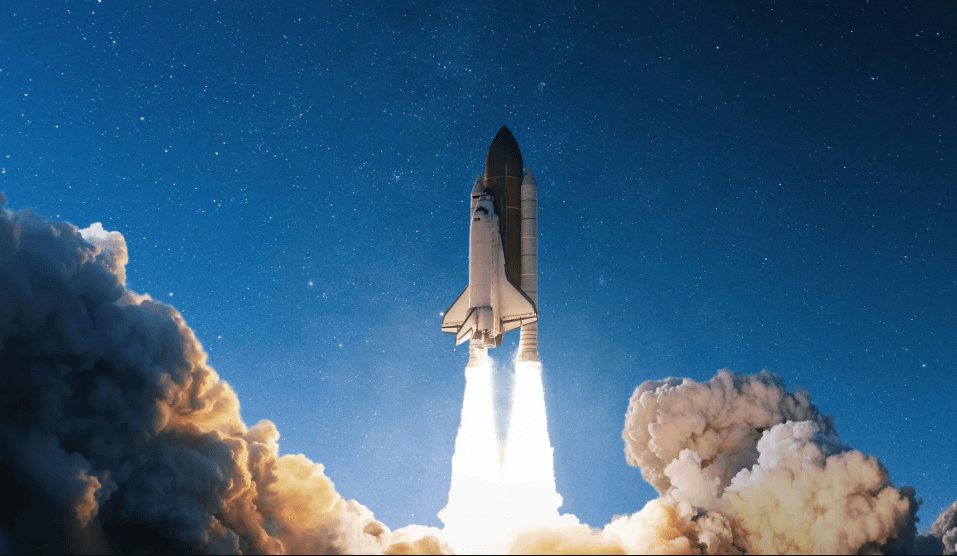
Recent advancements in technology are reshaping the landscape of space travel. The emergence of private space companies has intensified competition and innovation. Innovations in rocket systems have led to significant cost reductions and improved efficiency. Moreover, the integration of artificial intelligence enhances mission planning and navigation capabilities. Sustainable energy solutions are also becoming essential for long-duration missions. These developments raise critical questions about the future of human exploration beyond Earth.
The Rise of Private Space Companies
As the demand for space exploration has surged, private space companies have emerged as pivotal players in the aerospace sector.
These organizations are redefining space tourism through innovative commercial partnerships, enabling broader access to orbital experiences.
See also: How Tech Startups Are Disrupting Traditional Business Models
Innovations in Rocket Technology
While advancements in rocket technology continue to evolve, recent innovations focus on enhancing propulsion systems, reusability, and efficiency.
Reusable rockets are at the forefront, significantly reducing launch costs and enabling sustainable access to space.
Additionally, advanced propulsion techniques, such as ion drives and hybrid systems, offer improved thrust and fuel efficiency, paving the way for more ambitious missions and expanded exploration capabilities.
The Role of Artificial Intelligence in Space Exploration
The integration of artificial intelligence (AI) into space exploration represents a transformative shift in how missions are planned, executed, and analyzed.
Machine learning algorithms enhance data processing capabilities, allowing for real-time decision-making. Additionally, AI facilitates autonomous navigation, enabling spacecraft to traverse complex environments without human intervention.
This innovation not only increases mission efficiency but also expands the potential for deep space exploration.
Sustainable Energy Solutions for Space Travel
Developing sustainable energy solutions for space travel is critical for the long-term viability of extraterrestrial missions.
Solar propulsion systems harness the sun’s energy, providing efficient thrust while minimizing resource depletion.
Additionally, integrating waste recycling technologies can convert onboard waste into usable energy, further enhancing mission sustainability.
These advancements not only reduce reliance on traditional fuels but also promote self-sufficiency in the harsh environment of space.
Conclusion
As advancements in rocket technology, artificial intelligence, and sustainable energy converge, the landscape of space travel stands on the brink of transformation. The implications of these innovations extend beyond mere exploration; they promise to redefine humanity’s relationship with the cosmos. Yet, as we venture further into the unknown, one question looms: what unforeseen challenges and discoveries await us in this uncharted frontier? The answers may reshape our future in ways we have yet to imagine.