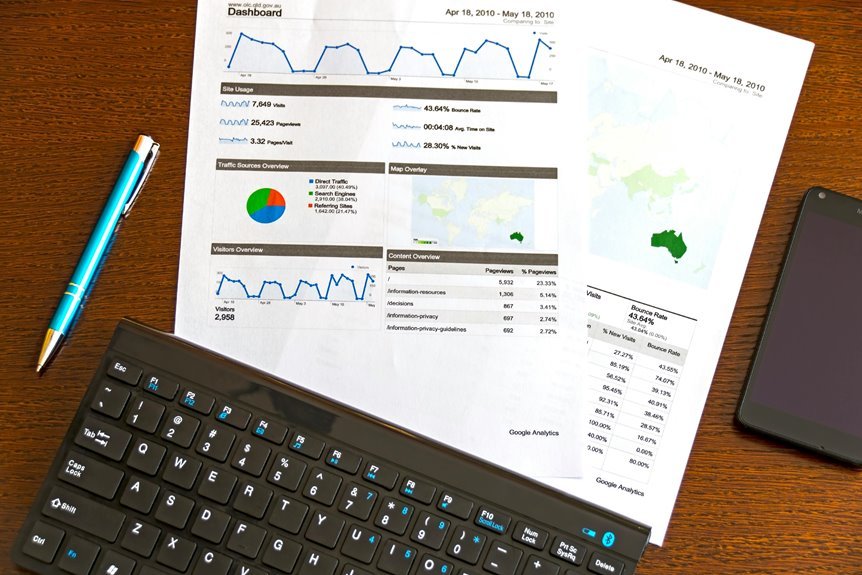
The corporate analytics landscape is evolving, marked by a pronounced shift towards predictive modeling and real-time analytics. Key identifiers such as 252490110 and 605914496 illustrate the growing integration of machine learning in operational frameworks. Yet, as organizations harness these insights, challenges like user adoption and compliance with data privacy regulations persist. Understanding how these dynamics influence strategic decision-making is crucial for organizations aiming to leverage analytics effectively. What remains to be seen is how these challenges will be addressed.
Exploring Emerging Trends in Corporate Analytics
How are corporations adapting to the rapidly evolving landscape of analytics?
They are increasingly implementing data visualization and predictive modeling, leveraging machine learning for enhanced insights.
Real-time analytics enable agile decision-making, while robust data governance frameworks ensure compliance with data privacy regulations.
Cloud integration facilitates scalability, and fostering user adoption remains critical for maximizing the benefits of these emerging trends in corporate analytics.
Evaluating the Implications of Analytics Insights on Business Strategy
As organizations increasingly harness analytics insights, the implications for business strategy become profound and multifaceted.
Analytics enable data-driven decisions, allowing firms to refine their strategies based on real-time performance metrics. This transformation fosters agility, empowering leaders to respond to market shifts proactively.
Ultimately, integrating analytics into strategic planning not only enhances operational efficiency but also promotes sustainable growth in a competitive landscape.
How Do Corporate Analytics Impact Business Strategy?
When organizations leverage corporate analytics, they fundamentally reshape their business strategies by transforming raw data into actionable insights.
This shift enables data-driven decisions that enhance strategic alignment across departments. By pinpointing inefficiencies and identifying market opportunities, analytics empower leaders to craft informed strategies, fostering adaptability in a dynamic business landscape.
Ultimately, corporate analytics serve as a catalyst for strategic innovation and competitive advantage.
Leveraging Analytics for Strategic Decision-Making
Although organizations may possess vast amounts of data, the true value lies in their ability to leverage analytics for strategic decision-making.
Cultivating a data-driven culture empowers teams to utilize predictive modeling, leading to informed choices that enhance operational efficiency.
Conclusion
In a rapidly evolving landscape, corporate analytics serves as both a beacon and a labyrinth. As organizations navigate the intricate pathways of predictive modeling and real-time insights, the promise of enhanced decision-making looms large. Yet, lurking in the shadows are challenges of user adoption and compliance, threatening to derail progress. Will firms rise to establish robust governance frameworks, or will they falter at the precipice of innovation? The future of strategic initiatives hangs in delicate balance, awaiting resolution.